
Palm reading
Kundli Astrology vs Palmistry: What Is the Difference?
In the traditional framework of Jyotish (often translated as the "study of light"), both Kundli-based Astrology and Palmistry (Hastarekha or Samudrika Shastra) are described by classical authors as sister disciplines that originated from the same cultural and philosophical roots.
3 min read
Rather than competing with one another, traditional texts view them as two different lenses attempting to read the same story.
As one classic text describes the relationship: "While palmistry is a lined sketch engraved on the palm by Nature, astrology is a painted picture with full details and colours".
Here is a breakdown of the key differences between the two traditions:
1. The Source Material: The Sky vs. The Body
Astrology (Kundli): A Kundli is an astronomical map of the sky calculated for the exact moment and geographic coordinates (latitude and longitude) of a person's birth. It relies on external cosmic positions—tracking the 12 zodiac signs (Rashis), 12 houses, planets, and microscopic divisional charts (Vargas).
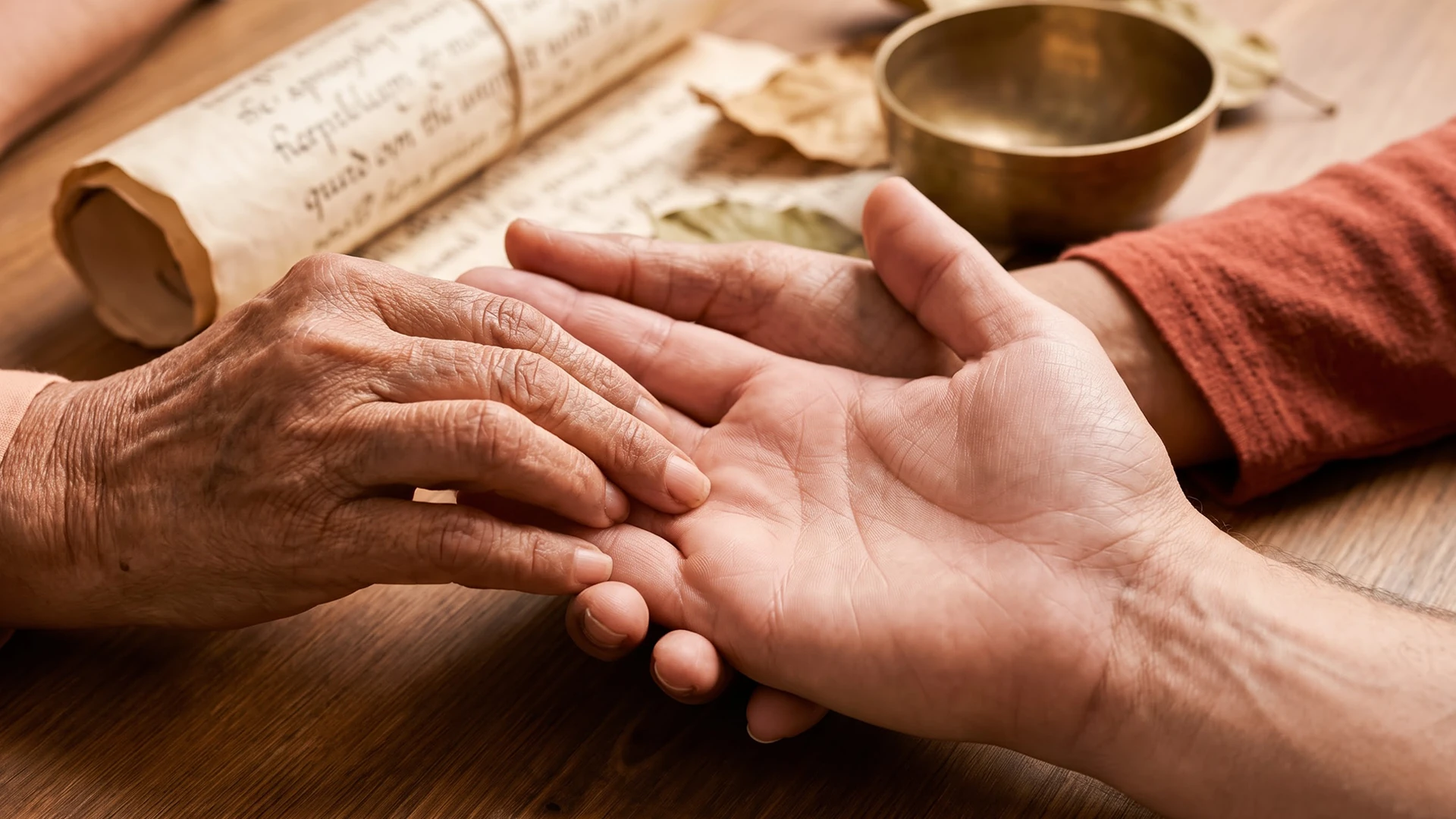
Palmistry (Samudrika Shastra): Palmistry is a branch of morphology—the study of physical signs, lines, and mounts directly on the human body and hands. Traditional practitioners view the hand as a physical mirror of a person's character and life milestones, meaning a palmist does not need birth coordinates to do a reading.
2. Dependence on Exact Birth Time
Astrology: Preparing an accurate Kundli depends heavily on knowing the exact time of birth, local sunrise, and location. As the texts note, even a few minutes' difference—or disagreements over whether birth occurs at the severance of the umbilical cord or the baby's first cry—can lead to errors in casting the Ascendant (Lagna) and divisional charts.
Palmistry: Palmistry bypasses the problem of unknown or inaccurate birth times entirely. A palmist looks directly at the physical hand in front of them, examining the shape of the fingers, the raised flesh (mounts) at the base of the fingers, and the depth and direction of the lines.
3. Static Blueprint vs. Changing Lines
Astrology: Once a natal birth chart (Janma Kundli) is cast for the moment of birth, that foundational chart never changes for the rest of a person's life. Future changes are read by calculating planetary periods (Dashas like the 120-year Vimshottari system) and real-time planetary movements (Transits) against that fixed birth chart.
Palmistry: The human hand is dynamic. According to the palmistry texts, a child's hand grows along with their body and mind, and the lines are not considered settled or dependable until around the age of 14. Even in adulthood, while the major lines and thumb ridges remain fixed, smaller lines on the palm continue to change over time as a person's mindset and circumstances evolve.
4. Precision in Timing Events and Family Details
Astrology: Because Kundli-based astrology uses mathematical time-cycles (Dashas) and planetary degrees, traditional authors consider it much more detailed for pinpointing the timing of events and reading information about a person's extended relatives (parents, siblings, and family background). Furthermore, astrology covers broad branches that palmistry does not, such as national/world forecasting (Mundane astrology), weather forecasting (Astro-meteorology), and picking auspicious times (Muhurta).
Palmistry: Pure palmistry focuses primarily on the individual's psychological makeup, personal character, health tendencies, and major life milestones. As the texts point out, it is difficult in standard palmistry to ascertain the exact timing of future events or details about a person's relatives unless the palmist combines astrological techniques with palmistry (a hybrid discipline known as Astropalmistry, which maps the 12 zodiac signs onto the phalanges of the fingers and planetary influences onto the mounts of the palm).